
He is convinced that the upgrade will improve the quality of the municipality’s already excellent care services, and that many more municipalities will follow suit.
4G Safety Alarms Improve Health Care
The municipality of Lillesand is one of the first municipalities to have replaced all safety alarms for elderly residents living at home with 4G-only safety alarms. There are good reasons for this.
– Best of all, the improvements will be implemented without requiring major changes
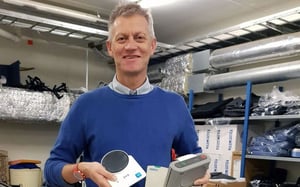
Geir Odmar Heldal, Welfare Technology Advisor for the Municipality of Lillesand
We’re living longer and managing to live independently in our own homes for longer as we age. This has implications for the kind of assistance older adults want and what is required of a personal safety alarm. In Lillesand, they’ve responded to this trend by upgrading all personal safety alarms in the municipality.
“We are not a municipality with any special conditions for adopting assistive technology. Both in terms of population and the number of personal safety alarms, we’re right on the national average,” says Geir Odmar Heldal, welfare technology advisor for the municipality of Lillesand. Heldal led the process of replacing all of the approximately 200 personal safety alarms. “When we roll out the new alarms, it is first and foremost a natural upgrade,” says Heldal.
“Welfare technology isn’t meant to replace, but rather to supplement, the excellent care that home health aides already provide to our seniors,” says Geir Odmar Heldal, welfare technology advisor for the municipality of Lillesand.
The fact that we opted for the 4G solution is, of course, because we place a very high priority on care services in the municipality, but we were also mindful of choosing a solution that would prepare us for the future.
And the possibilities are endless. Sensors on doors and windows can detect if a person leaves the house in the middle of the night. A sensor in the bed can detect if the person returns to bed after a nighttime trip to the bathroom.
– Smoke and fire alarms can also be connected, and really, the only limit to what can be detected is your imagination.
Privacy is safeguarded by ensuring that both the home care service and the person using the alarm understand and consent to its use. – You can then choose who should be notified: family members or the home care service.

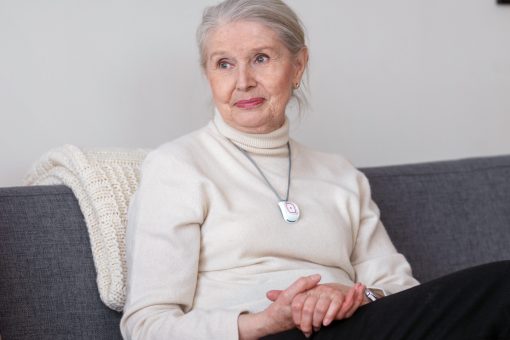
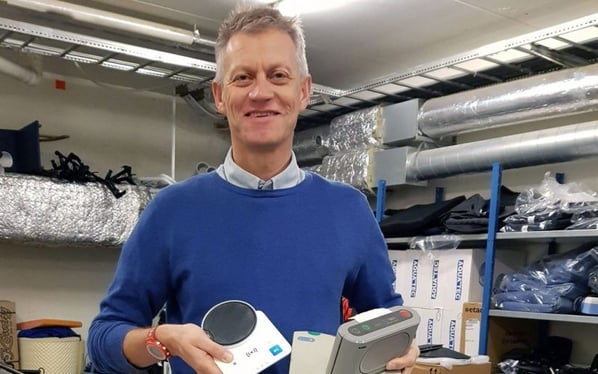
The municipality of Lillesand is making history by replacing all of the old devices (on the right) with the new white 4G personal safety alarms.
More Effective Assistance Thanks to the Response Center
Previously, all safety alarms went directly to the home health care nurse unfiltered, regardless of severity or the nature of the incident. This could lead to unnecessary disruptions, says Heldal. “Now, all alarms go through a response center staffed by nurses and healthcare workers.”
At the response center, the need for assistance is assessed, and the appropriate resources can be dispatched in a timely manner.
“The nurses who go on home visits will have a more organized workday, where they can spend the allotted time with the patient without being unnecessarily interrupted by an alarm or a phone call,” Heldal believes.
Patients will also appreciate that the home health aide’s phone rings less frequently during home visits. “It’s a kind of accepted truth that home health nurses are pressed for time, and that experience is clearly exacerbated by constant phone calls,” Heldal says. He is convinced that the upgrade to 4G alarms will result in better professional care and better interpersonal care.
“In addition, we’ve already seen that the new alarms offer an extra layer of security,” says Heldal. When Storm Knud knocked out some cell towers in the nearby municipality of Birkenes, they were glad they had upgraded the safety alarms in the affected area. That’s because they could see exactly which safety alarms had been knocked out. This allowed them to prioritize who needed extra supervision and who they knew had functioning alarms.
“Best of all, the improvements will be implemented without requiring major changes for either caregivers or patients,” says Heldal. Behind the scenes, he handles the administrative tasks that will require follow-up—both to ensure that everything is working as it should and that all integrations and system coordination proceed as planned.
Good cooperation and assistance with implementation
The reason for this choice was the agreement on joint procurement of welfare technology solutions in the Agder municipalities. “A necessary upgrade of the alarms was imminent, and we found it most practical and cost-effective to opt for alarms that transmit over the 4G network,” says Heldal.
“The alternative would have been to go with 2G alarms, but since the 2G network is set to be phased out as early as 2025, we chose the more sustainable 4G solution.”
To municipalities that find this exciting, Heldal wants to emphasize that it is by no means a complicated solution reserved only for the few and privileged. “The technology is available, so it should be entirely possible for all municipalities to implement it—with local adaptations, of course.”
Geir Odmar Heldal and his team have found Tellu to be a key partner throughout the entire process. “They don’t just provide the technology; they also follow up with consulting and kick-off meetings when new technology is being implemented.”
“In addition, all analysis and documentation are shared, so we can benefit from others’ experiences with rolling out similar technology,” says Heldal. “Similarly, we’ll share our experiences as we get our transition up and running.”
Tellu's personal safety alarm is ready for new services such as
- Video monitoring
- Remote medical monitoring
- Proactive care
- Connectivity options for a large number of wireless sensors
- Seamless integration with the 3rd-generation Novo Go mobile personal safety alarm
Applies to Neat Novo 4G. New services may require an upgrade.
Would you like more information?