
TelluVisit
Advanced technology for user-friendly digital meetings and services.

At Økernhjemmet, digital monitoring has helped improve safety for both staff and residents at night while maintaining the quality of care, even during the COVID-19 pandemic.

Turid Mood, Director of Økernhjemmet
 Digital oversight helps healthcare professionals focus their time more effectively on those with genuine needs.
In collaboration with SINTEF, Tellu has carried out a research project aimed at documenting new approaches to providing health care through the use of assistive technology. Disturbances and incidents of violence at night were a challenge at Økernhjemmet. The introduction of digital monitoring proved to save resources and led to increased safety and well-being. The solution also proved beneficial when the coronavirus outbreak reached the facility.
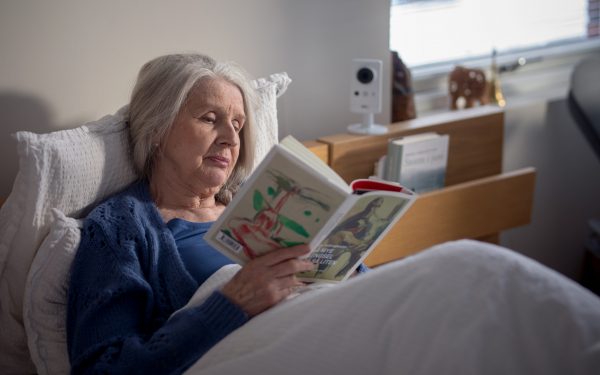
The experience at Økernhjemmet suggests that digital supervision helps ensure greater safety for both staff and residents while maintaining the quality of care, even during the COVID-19 pandemic.
Staff outside cohort units can assist colleagues and residents in the isolation unit via the web application without having to put on full personal protective equipment. Safety cameras can also help detect changes in behavior that may indicate a decline in overall health.
For example, a patient who kicks off their blanket and lies restlessly may turn out to have a fever and elevated CRP levels, indicating an emerging infection. Digital monitoring can thus ensure that sick residents receive help more quickly.
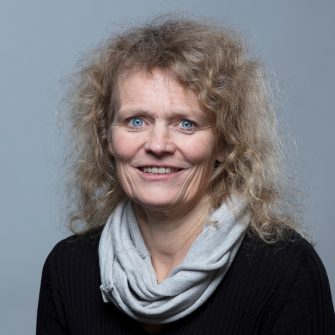
Mette Røhne, a researcher at SINTEF Digital, has closely followed the trial of digital monitoring at Økernhjemmet
– Since Økernhjemmet introduced digital supervision in January 2020, they have experienced major changes. With a calmer environment, fewer incidents, and reduced risks and use of emergency medication, they were able to eliminate one night shift. The result was simply better for the residents and a more satisfying work environment, summarizes Mette Røhne, a researcher at SINTEF Digital, who has closely followed the trial of digital monitoring and been responsible forthe evaluation.
For Økernhjemmet, improved quality of the healthcare provided has been a key benefit of the new technology.
“Digital monitoring helps healthcare staff focus their time more effectively on those with genuine needs. This improves quality because some residents can sleep in peace, while others receive the help and supervision they need,” concludes Mood.