


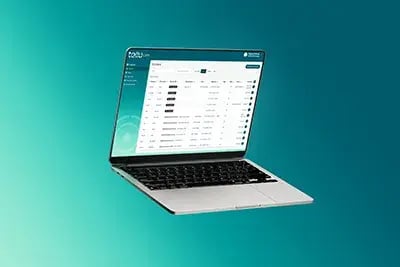
TelluVisit
Advanced technology for user-friendly digital meetings and services.

For kidney patients on home dialysis, digital home monitoring has made their daily lives both easier and safer.
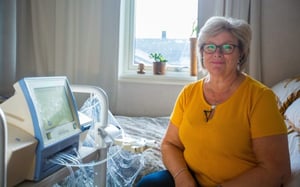
Beate Karlsen, patient
“Before I started dialysis, I wondered how I would get through the day. I would sit in my armchair, unable to get up,” says Beate Karlsen (60).
Her kidney problems were first discovered nearly 25 years ago, after she gave birth to triplets. Yet it wasn’t until three years ago that she needed dialysis. By then, technology had advanced so much that she could now do it overnight in her own home in Fauske, a good distance from the hospital in Bodø.
“As soon as I started home dialysis, I not only got my life back—but also a whole world of possibilities,” says Karlsen.
She is one of the first dialysis patients at the hospital to test a solution developed by Tellu that makes remote monitoring of patients with kidney failure both easier and safer.
“In that sense, the distance to the hospital doesn’t matter much anymore. At the same time, I feel like I can really live with this arrangement. I take the backup machine with me to the cabin and wherever I go, and I’m able to do pretty much everything I want to,” says Karlsen.
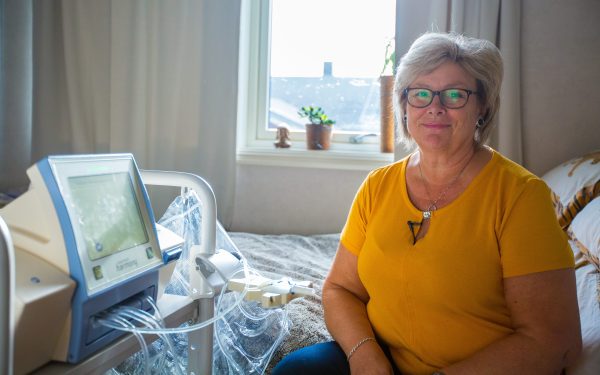
HAS GOTTEN HER LIFE BACK: With home dialysis, Beate Karlsen now has all the opportunities she could wish for. And as a participant in the pilot program for digital home monitoring, this can happen in the simplest way possible.
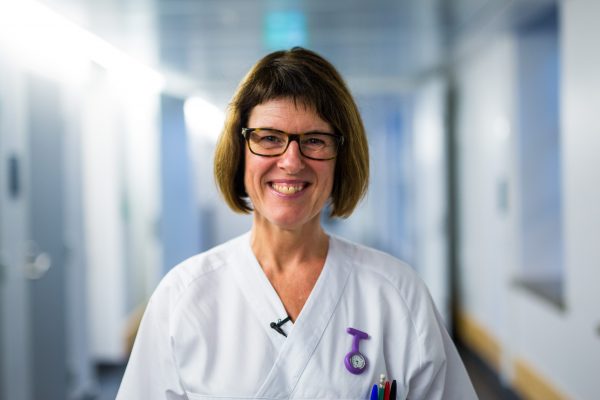
PROVIDING A SENSE OF SECURITY: For kidney patients, nurse Sissel Klæth Eilertsen represents a sense of security. With the new remote follow-up project, patients feel closer to her and the hospital, despite the long distances.
At Nordland Hospital in Bodø, renal nurse Sissel Klæth oversees all patients on home dialysis in the region.
“Patients are often on their own with their treatment at home. They have to keep track of a wide range of health data, such as weight, blood pressure, and fluid levels during dialysis. They then have to send this information to the hospital at regular intervals,” says Klæth.
Traditionally, patients have recorded this information in their own ways, usually by hand. According to Klæth, this process is often both cumbersome and time-consuming for everyone involved.
– Patients have sent us their measurement data in a variety of ways, often via email or fax. Since many of our patients are elderly and don’t have email, a lot of time has been spent manually collecting all the paperwork and information.
“At the same time, we know that all patients are different. Some are very careful about noting everything down, while others quickly forget,” says Klæth.
 The only thing I care about is that the whole thing is easy.
The new system has also been a great help to Asle Nystad (68), a former smallholder in Brønnøysund. Nystad has polycystic kidney disease, and whenever he has to go to the hospital for a kidney checkup, he has to fly to Bodø in the morning—and return in the evening.
“Before, I had to write everything down on a form, which I’d send off once a week. In that sense, I think communication with the hospital has improved now that everything is submitted every day,” says Nystad.
He says he doesn’t really think much about the technology that makes this possible—as long as it works. “The only thing that matters to me is that the whole process is convenient,” adds Nystad.
“I read the numbers in the morning and enter them on my phone. Then I use the blood pressure monitor and the scale, which send everything automatically. That way, I know they’ve received what they need at the hospital,” says Nystad. “They check to see if everything is as it should be.” And if, for example, the machine isn’t working, they call me. Now it’s usually them who contact me, rather than me contacting them.”
One of the most important pieces of feedback Tellu received after speaking with patients prior to the project was that they did not want to lose the human connection.
“Some people might have thought this would mean we’re ‘removing Sissel.’ But what we’re seeing is that, in practice, Sissel is now perceived as being more present—and that she can devote more of her time to the patients who need her most,” says Skaare Mortensen.
For Beate Karlsen in Fauske, the hospital feels “closer” now that she knows the hospital—and Sissel Klæth in particular—is able to keep a close eye on things.
“Sissel is truly one of a kind. You meet so many people in the healthcare system, but she’s something special. “When I go to see her at the hospital, it almost feels like visiting a friend. To me, she’s a source of reassurance,” says Karlsen, adding: “The way things are set up now, I think it’s absolutely fantastic. Everything is simply easier.”
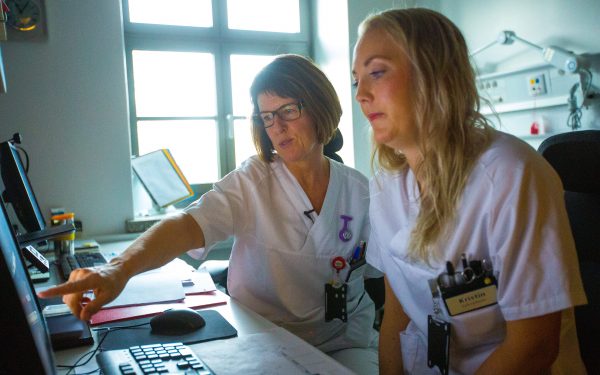
EVERYTHING IN ONE PLACE: Once all relevant information has been transferred from the patients, Sissel Klæth Eilertsen (left) and her colleagues can get a complete overview right on the screen.
In her day-to-day work at the hospital in Bodø, Sissel Klæth has also noticed that communication with patients has improved since the new system was implemented.
“If a patient calls, they know we’ve already seen the results. I can then be a little more prepared and say, ‘I see you’ve had a few fewer alarms’—that way, they don’t have to keep explaining why they’re calling.” “This is a very grateful group of patients who clearly appreciate that when they call, we know who they are and how they’re doing,” says Klæth.
Since hospital staff can access relevant information on all patients via a dashboard on their computers, they can also more easily identify who to prioritize.
“If there’s someone we want to keep a closer eye on, we can check in a little more often and monitor their progress more closely. They can also add a comment, so if they have any questions or want us to call them, they just type it right into the app,” says Klæth.
“Those who have been given this tool think it works really well. They’re often far away, but as a rule, we know everything is fine if we don’t hear anything—they also know they can always call,” says the renal nurse.

 EASY TO USE: “The only thing that matters to me is that it’s all hassle-free,” says Asle Nystad—who doesn’t give much thought to the technology that makes this possible.